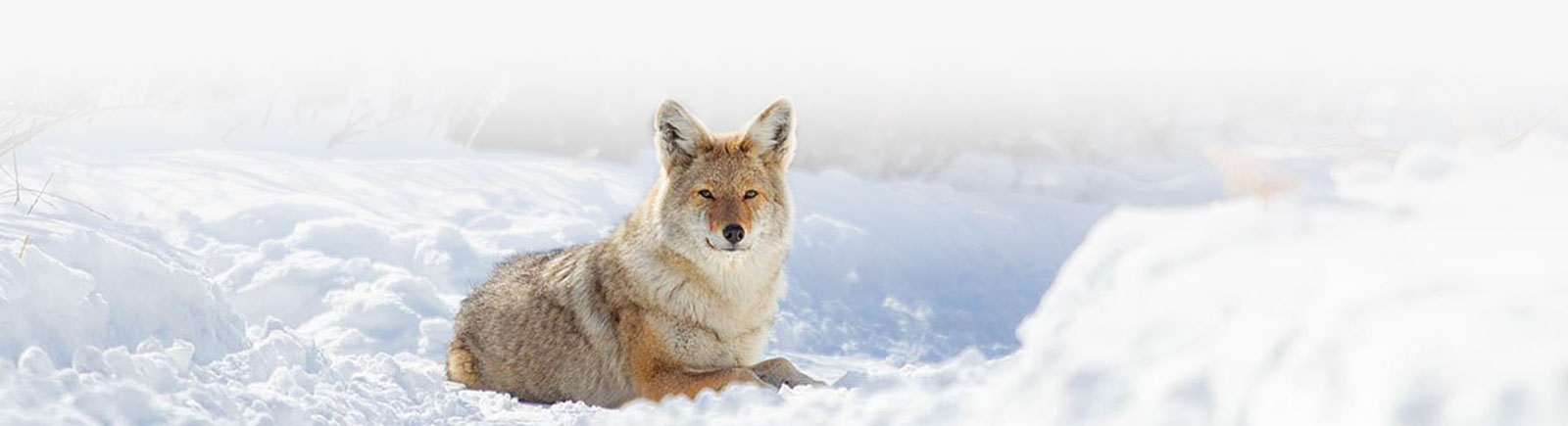
Coexistence begins with understanding, and some of the most meaningful lessons come from lived experience. This reflection from a longtime, dedicated volunteer bring forward how observing coyotes over time can change fear into respect and awareness. Stories like this help us see that sharing space with wildlife is not unusual — it is part of living in biodiverse communities.
Sentinels of the Urban Wild
March 17th, 2026
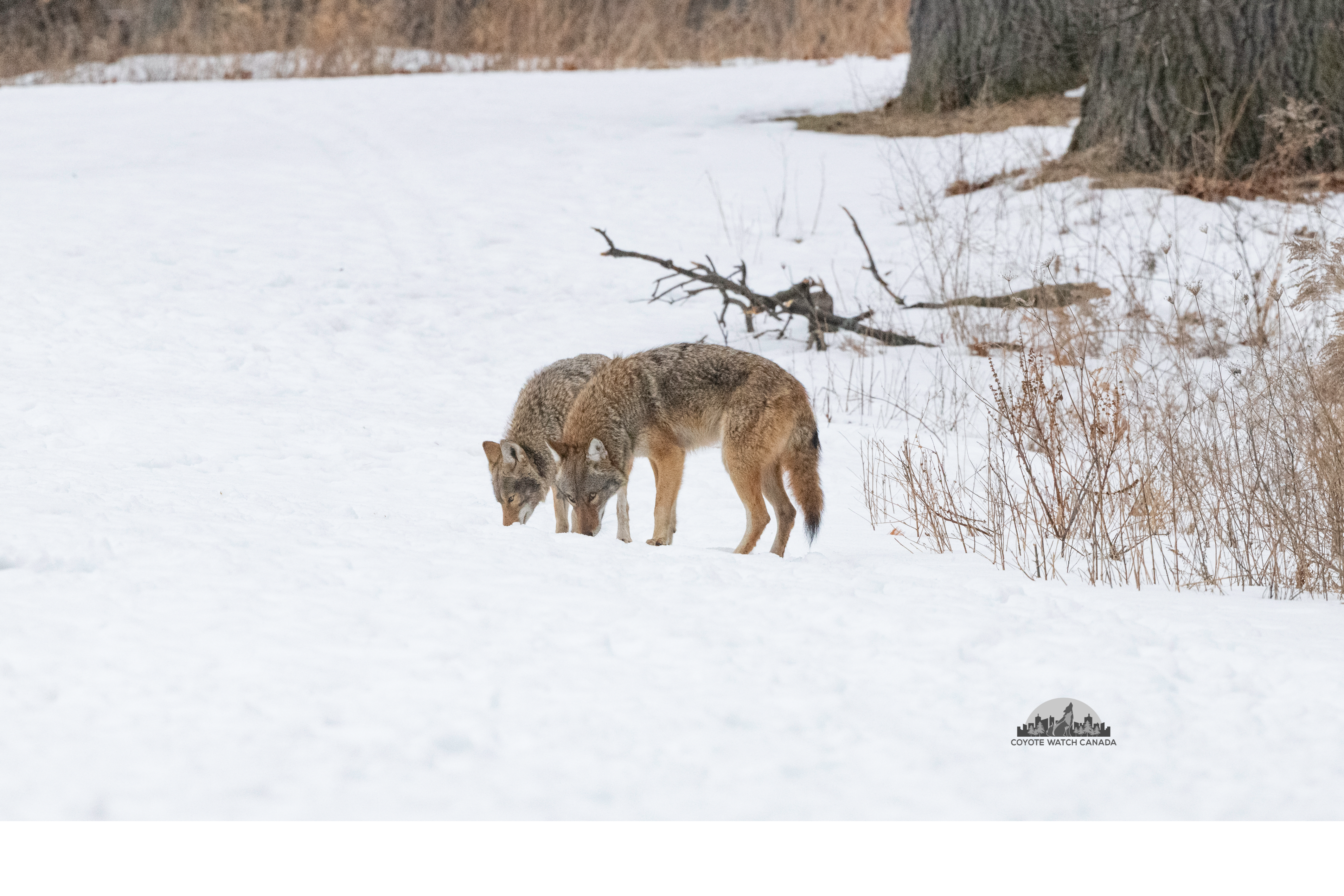
These two coyotes were the first local residents I got to know many years ago. I began planning my routes, hoping for a sighting. They were always together, so if I saw one I knew the other would eventually appear. Together they showed each other loyalty, playfulness, and patience. If one was ahead, they would stop, look back, and only proceed when they saw the other one coming. One morning after their walk, one lay down under a tree not too far from a busy road. Like a sentinel, the other sat observing the people and dogs walking by, ensuring that trouble wasn’t approaching. Nobody else noticed them. I could only see them because I watched them walk to that spot. Later that year, they moved from the park and I still think of them frequently.
I appreciate the coyotes who live in our neighbourhoods, including in parks, ravines, and empty lots. Some say that coyotes don’t belong in the city, that they would be happier in a forest somewhere, and that they should be relocated. Nothing could be further from the truth. Can you imagine a coyote being trapped, torn from their family and familiar territory, and then dropped into a wooded area outside the city where they don’t know the land or the other predators, including human predators? Relocation doesn’t work and is inhumane. Coyotes are here to stay and moved in over a hundred years ago after humans killed larger predators, removing them from some landscapes. They are natural, not invasive. Both forests and urban spaces are their own ecosystems, and coyotes can thrive in both. But taking an urban coyote and forcing them to find food and territory in a rural area is setting that animal up to fail.
They have plenty to eat, such as squirrels, mice, and rats. They are so adaptable that they can live beside us and, for the most part, we only know because we catch a glimpse of them as they go about their lives. I have passed by grassy areas thinking nothing is there, only to have a coyote yip and howl from a hidden spot. I have watched coyotes standing undetected on the side of a path, waiting for people to pass, only to cross behind them. Most of the time, people don’t even know they passed a coyote. That’s how much they blend in.
That’s why it is so important not to buy into the fearmongering and hate. Most people who have walked past fields or green spaces have passed by a coyote incident-free. That’s what most encounters are like. We can appreciate and support coyotes by giving them space and respect. That means helping our wild neighbours by keeping dogs leashed when walking by a field or ravine so they do not disturb wildlife. And of course, never feed them. They can find their own meals.
~ Coyote Watch Canada Volunteer
This tribute is part of our ongoing commitment to nature literacy — learning how wildlife lives, how our actions affect them, and how coexistence grows through artistic expression, visual and written storytelling, knowledge, respect, and responsibility. Thank you for joining us in celebrating coyotes and the shared path toward compassionate coexistence. ~Coyote Watch Canada