
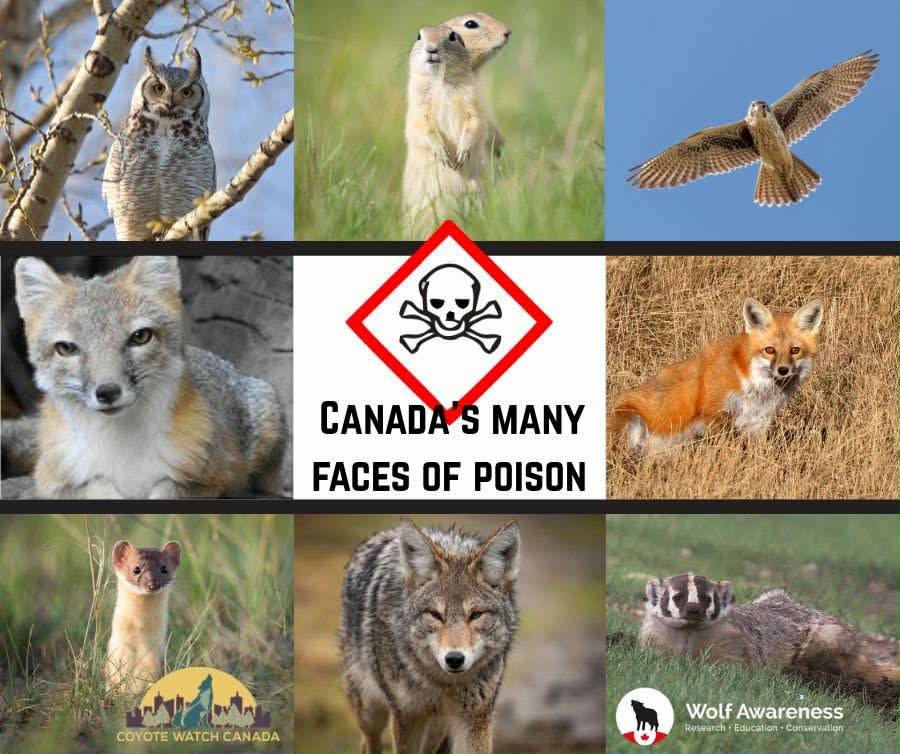
Coyote Watch Canada has joined 12 other leading animal protection and environmental organizations in calling on Health Canada to immediately reverse its March 30 decision authorizing "emergency" use of strychnine in Alberta and Saskatchewan. In a letter to the Minister, the national coalition warns that reinstating this notoriously cruel poison contradicts Health Canada’s own science-based bans from 2020 and 2024, which found strychnine posed unacceptable risks to wildlife, companion animals, and ecosystems.
The groups are urging the federal government to reject outdated poisoning practices and instead support humane, effective, and ecologically responsible solutions for managing Richardson’s ground squirrel populations.
Why This Decision Matters
Health Canada had previously phased out rodenticidal strychnine beginning in 2020 and cancelled all remaining uses in 2024 after concluding that the risks could not be adequately mitigated. The new emergency permits allowing its use until 2027 represent a significant policy reversal. Coalition members argue that no new scientific evidence has emerged to justify changing course.
Serious Concerns About Strychnine Use
Cruel and Inhumane Poison
Strychnine is widely recognized as one of the cruelest poisons still in use. It causes severe neurological distress, painful convulsions, respiratory failure, and prolonged suffering before death. The coalition maintains that no modern wildlife or agricultural policy should permit a substance with such well-documented animal welfare impacts.
Indiscriminate Harm to Wildlife and Pets
Although approved for Richardson’s ground squirrels, strychnine does not remain limited to one species. Owls, hawks, eagles, foxes, coyotes, badgers, domestic dogs, and other animals may consume bait directly or ingest poisoned prey. This creates broad secondary poisoning risks across prairie landscapes.
Undermining Natural Rodent Control
Predators such as coyotes, foxes, raptors, owls, and badgers naturally help regulate rodent populations. Removing these species through poisoning weakens ecological balance and can worsen the very problem the poison is intended to address.
In the coalition’s press release, Coyote Watch Canada’s founding Executive Director, Lesley Sampson, warns that predator killing, bounty programs, contests, and poisoning campaigns disrupt the prey-predator relationships healthy landscapes depend on. The organization’s position is clear: Canada needs more functioning predator populations on the land—not more poison.
Threat to Prairie Ecosystems
Coalition members also point to the vulnerability of prairie grasslands, already recognized as among Canada’s most endangered ecosystems. Introducing toxic bait into these habitats risks further biodiversity loss and ecological decline. Lia Laskaris of Animal Alliance of Canada has questioned how the use of this chemical can be justified in such a sensitive environment.
Better Alternatives Exist
The coalition emphasizes that humane and effective alternatives are available. Hannah Barron of Wolf Awareness notes that helping farmers work with nature—rather than against it—can strengthen natural biological control systems.
Recommended alternatives include:
- Supporting native predator populations
- Installing raptor nesting platforms
- Maintaining vegetation along field edges
- Protecting badgers and other beneficial wildlife
- Ending predator bounties and poisoning programs
- Expanding integrated pest management practices
These approaches are more sustainable, more targeted, and more consistent with long-term ecological health.
A Call for Evidence-Based Policy
Kaitlyn Mitchell of Animal Justice has described death by strychnine as excruciating and argues that Canadians expect better than indiscriminate poison being distributed across ecosystems where wildlife and companion animals may suffer unnecessarily.
The coalition’s overall message is that reviving strychnine is a step backward—harmful to animals, ecosystems, and public confidence in evidence-based regulation. Coyote Watch Canada and its partners are calling on Health Canada to immediately restore the ban and support humane, science-based solutions that protect farmers, wildlife, and prairie ecosystems alike.