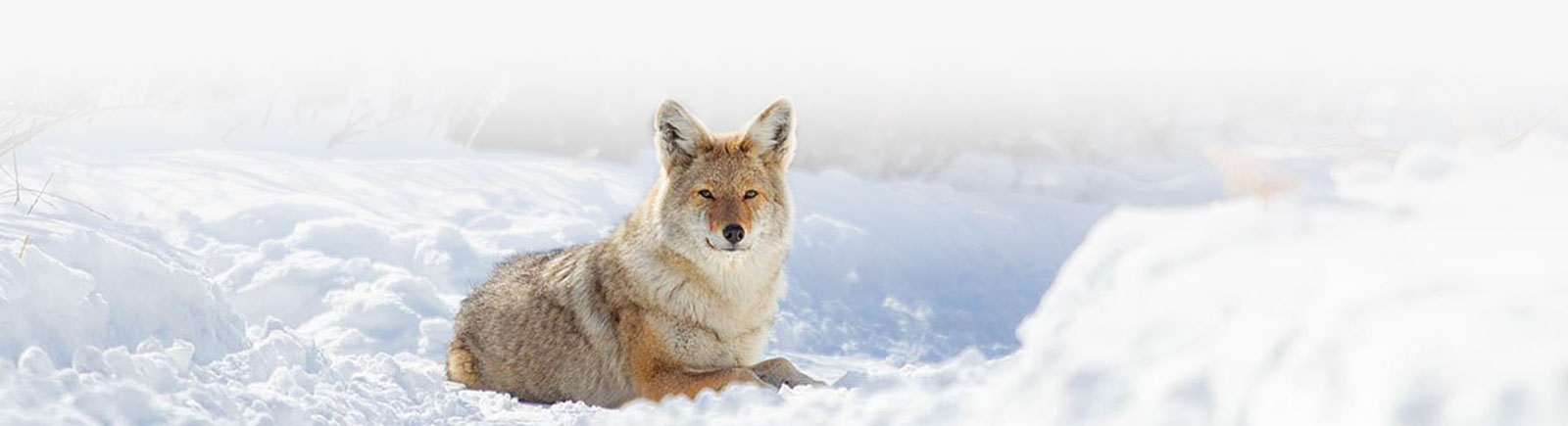
ACTION ALERT: Tell Ontario to Enforce Killing Contest Laws
Take action to tell your MPP and the Ministry to enforce laws that can stop a coyote killing contest in Ontario.


Take action to tell your MPP and the Ministry to enforce laws that can stop a coyote killing contest in Ontario.

If we wrote out a list of the most misunderstood animals in Canada, coyotes would be near the top. It seems like every time there’s a negative interaction between a coyote and a person or pet, it makes headlines. What doesn’t make the news? The peaceful coexistence that takes place between coyotes and humans across the country every day.

Strategies to live alongside wildlife aren’t failing; it’s time for them to begin in earnest.

What does this mean? It means attempting to capture a photo in a way that does not upset the behaviour or existence of the animal being photographed. It means keeping your distance as much as possible (to whatever a particular animal is comfortable with), and with today's camera technology, that's not too difficult to do! Use a telephoto lens, and even when using a lens that's not super long, with the resolution of modern digital cameras and current editing software, it's very easy to crop a...

Following the announcement that more coyotes will be killed, we are left feeling anger, sadness and frustration that opportunities to prevent this outcome were ignored or missed.

Dr. Shelley Alexander’s nuanced explanations of coyote behaviour filtered down to one simplistic statement while interviewing on Morning Live.

Coverage of wildlife encounters frequently use sensationalized language and opinions, leaving facts to be unearthed by readers.

Contest could also put at-risk Algonquin wolf at risk. Take action to end it!

Lauren Van Patter and Lesley Sampson discuss why sometimes "hazing" works and sometimes it seems it doesn't on the Defender Radio podcast.
As many of you know I am a wildlife photographer, what most don't know are the hours, patience, cost, and dedication it takes to catch a glimpse of an animal. Sometimes we are given chances where time stands still and we can capture them in their natural habitat from a safe distance. Other days we are out from sunrise to sunset and don't find anything.